Russia Continues Losing Ground in the War. What Happens Next?
The course of the Russian-Ukrainian war indicates that it is reaching a tipping point characterized by a dynamic balance of power between the sides, with the balance gradually shifting in our favor;
this situation calls for answers to the following questions: what will Russia do next, what will it be able to achieve, and what will be the consequences of its actions for Ukraine, and ultimately, for Russia itself? This will allow us to predict when and how the war will end.
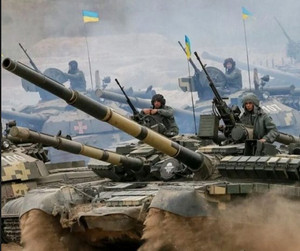
In our previous posts, we have already pointed out that the Russian-Ukrainian war is effectively transitioning into a stalemate, with signs of an impending turning point in Ukraine’s favor. Many Ukrainian and Western experts have now reached this conclusion. Some Russian politicians and propagandists also agree with them. Indeed, since the start of the year, the pace of Russian troops advances on the front lines has slowed down. Meanwhile, the Defense Forces of Ukraine (DFU) are not only holding their positions but are in some cases launching counteroffensives. DFU strikes against enemy rear facilities have become more effective. This already points to the possibility of further strategic gains.
It is therefore entirely reasonable to ask: what should we expect in the future, and when might the war end? This is a complex and ambiguous question. So, let’s try to answer it. To this end, we need to recall what exactly led to the current situation in the war. The reasons for these trends are well known and have already been discussed by us. But events are unfolding rapidly and providing new evidence that the situation is improving for Ukraine while worsening for Russia.
For one, Ukraine has surpassed Russia technologically, first of all in the areas of communications and command and control, artificial intelligence, UAVs, and air defense. This has offset Russia’s advantages in human resources, armored vehicles, artillery, aviation, and cruise missiles. And now that Ukraine has increased its stockpile of cruise missiles and ballistic weapons, Russia may no longer be able to launch missile strikes against our territory.
Thanks to the sheer size of its forces, despite personnel losses, the Russian Armed Forces are still capable of pushing back Ukrainian positions in certain sections of the front line. But they cannot break through those positions, let alone advance significantly deeper, because this is linked to the specifics of modern combat involving the massive use of UAVs. This is precisely what Ukraine is counting on in its plan, so to speak, to exchange temporarily lost territories for Russian resources, which are by no means infinite.
First and foremost, this concerns the people on the front lines. Ukraine is replacing them with UAVs and ground-based robotic systems as often as possible. Russia is unable to do the same. That is why its losses on the front lines exceed the number of new recruits arriving. By the way, Russian conscripts have finally begun to realize what awaits them during their service in the Russian army. As a result, the number of people willing to sign a contract, even for a high salary, has dropped sharply. For four months in a row now, the Russian Federation has only met 60–75% of its recruitment target for contract soldiers. This is being felt on the front lines. At the end of 2025, the number of Russian troops there stood at 720,000. At that time, the Command of the Armed Forces of the RF planned to increase it by several tens of thousands. However, by mid-April of this year, the number had, on the contrary, decreased to 680,000 personnel, that is, by 40,000. Russia sent reinforcements from its strategic reserve to the front, totaling 20,000 personnel. This allowed the enemy to accelerate the pace of the offensive on some directions, but only temporarily.
Currently, the Armed Forces of Ukraine are eliminating 30,000–35,000 Russian troops per month. Over time, this figure is expected to reach 50,000. Given the current rate of conscript recruitment, which stands at about 20,000 per month (a decrease of about 10,000 compared to last year), the total number of Russian troops on the front lines will shrink to approximately 500,000 by the end of this year. Unable to advance, they will be forced to switch to defence.
Russia’s problems with its air defense systems are no secret either. Even the Russian leadership acknowledges them. According to a statement by the Secretary of the Russian Security Council and former Defense Minister Sergei Shoigu, there are no longer any safe places on Russian territory. This comes as no surprise. Since the start of the war, Ukraine has destroyed over 1,500 of the enemy’s various air defense systems. The Russian defense industry cannot replace them, nor can it produce a sufficient number of anti-aircraft missiles. Today, there is a severe shortage of them. Moreover, unlike Ukraine, Russia cannot obtain air defense equipment from its allies. Therefore, it is forced to concentrate the remnants of its air defense assets to protect the most critical areas. The most important of these is Russian President Putin’s residence in Valdai. There is no shortage of such systems there. Until recently, the local close-range air defense consisted of two rings of 20 towers equipped with the “Pantsir-S1” air defense missile systems. In March of this year, seven more were added. And this – despite the fact that such systems are urgently needed both at the front and to protect truly critical infrastructure, such as oil refineries and oil and gas terminals in seaports.
Second in importance is Moscow, third is St. Petersburg, and fourth is the Crimean Bridge. The situation with Moscow and St. Petersburg is clear. These are Russia’s first and second capitals, so their defense is of paramount political significance. The Crimean Bridge is not as strategically important, at least not compared to the bridges across the Volga River, which provide strategic communication routes. But Moscow defends it at the highest level as a symbol of its imperial policy.
Air defense over the rest of Russian territory is significantly weaker, allowing the Ukrainian Armed Forces to penetrate it relatively easily. The consequences of such actions are also well known and need no elaboration. It suffices to recall how the oil refinery in Tuapse, in the Krasnodar Krai of the Russian Federation, was burning. Ukraine’s strikes on Russia’s oil and gas infrastructure in March and April of this year caused at least $4 billion in damage and prevented Russia from fully capitalizing on the opportunity to reap windfall profits from rising oil prices due to the war in the Middle East.
On the night of April 24–25, for the first time our UAVs reached the cities of Chelyabinsk and Yekaterinburg in the Urals, which are located about 2,000 km from Ukraine. And by this summer, Ukraine will have ballistic missiles capable not only of reaching Moscow but also of overcoming its air defense. In light of this, the leadership of the RF has decided to evacuate military enterprises from the region. But where to evacuate them, when not only the Urals but also Siberia may soon find themselves in Ukraine’s crosshairs?
There has also been extensive coverage of Russia’s economic problems. However, let us focus on them, since it is the state of that economy that determines Russia’s ability to continue military operations. Indeed, the country is currently in its worst economic position since the start of the war. According to official data, the country’s GDP fell by about 2% year-on-year in the first quarter of this year. However, according to estimates by independent experts, the decline was more significant, amounting to 5–7%.
During the same period, the Russian Federation’s budget deficit reached 4.6 trillion rubles, having exceeded the projected figure for the entire year of 2026, which was set at 3.8 trillion rubles. The reason is an 8% decline in budget revenues and a 17% increase in expenditures. This was a result of a 45% drop in oil and gas revenues compared to 2025, as well as additional expenditures to support the country’s economy. To cover the deficit, 2.5 trillion rubles were allocated from the National Welfare Fund’s reserves. Currently, only 1.5 trillion rubles remain in the fund.
Russia’s economic problems have become systemic in nature. As of mid-spring 2026, negative trends are observed in 22 of 28 key sectors. The most problematic sectors are metallurgy – which saw a 15% decline in the first quarter of this year – clothing and footwear manufacturing – minus11% – construction – minus 10% – and the food industry – minus 10%.
As before, the cumulative effect of Western sanctions remains the main driver of the crisis in Russia. At this, rising oil prices are not enough to overcome this effect and merely allow the economy to stay afloat at a minimal level.
The rapid deterioration of the Russian economy is exacerbating social problems. For instance, due to the lack of stable income, companies are failing to pay wages on time. Today, such wage arrears amount to 2.12 billion rubles, which is by 47% more than last year. People’s lives are getting further complicated by rising prices for all types of goods and services. Officially, inflation in Russia in 2026 is set at 3%. However, in reality, it already stands at a minimum of 15%.
Citizens are dissatisfied with this state of affairs and are beginning to protest. So far, the protests have been limited in scope. But, for example, in Vorkuta, miners are already prepared to strike, as they did in the 1990s.
In any case, the deterioration of the socio-economic situation in Russia, coupled with the lack of success in the war against Ukraine, is causing a decline in the authority of the current government, including Putin personally. The government does not publish actual data from sociological surveys; however, even what is published allows us to identify trends. In particular, even according to official reports, in April of this year, the level of trust in Putin fell to 71%, which is the lowest figure since the start of the war.n And in surveys where citizens are asked to name the people they trust, Putin’s approval rating stands at just 32%. Against this background, Putin and his regime are losing control of the situation in the country. This is evidenced by criticism of the state of affairs in Russia, which has recently been spreading both on social media and on national television. Representatives of all strata of Russian society are joining in, including ordinary citizens, bloggers, propagandists, and prominent politicians.
This process clearly reflects the people’s desire for change in the country. At the same time, it may be deliberately fueled by certain political-oligarchic forces within Russia’s ruling elite, with the involvement of the security services, in order to undermine Putin’s authority and create conditions for his removal from power.
In Ukraine, the economic situation is also quite difficult. It is further exacerbated by Russian strikes on our energy, industrial, transportation, and other infrastructure. However, Ukraine is receiving assistance from the EU, NATO, the IMF, and partner countries. As is already known, an EU’s loan to Ukraine in the amount of EUR 90 billion was recently unlocked. And NATO has allocated additional 60 million dollars. The United States has stopped providing financial aid to Ukraine but continues to supply weapons using European funds.
Russia has nothing of the sort. China isn’t helping it; it’s merely selling dual-use goods at prices higher than global market rates. Iran, as a partner, is lost. Its defense industry has been devastated and won’t be operational for a long time. North Korea has exhausted all its military reserves; there is nothing left to sell to it. Therefore, Russia cannot win the so-called “war of resources” with Ukraine. In this regard, it is not really fighting Ukraine alone, but the entire Western world. And the West has far greater financial and economic resources. Therefore, the war has truly reached a dead end in the broadest strategic sense. Russia will by no means be able to capture all of Ukraine. The same can be said about Moscow’s plans to occupy the entire Donetsk region. It will not succeed in doing so swiftly.
Everything discussed above requires Russia to end the war. This does not guarantee that this would resolve all its problems, but at least it would have the opportunity to avoid catastrophe in the near future.
Putin can do this at any moment. Proposals to freeze the war along the front lines remain on the table. This option is the best for Russia. It would be able to reduce military spending and redirect funds to support its economy and meet the social needs of its population. And once a peace agreement is concluded, the EU and the US would begin lifting sanctions against Russia, creating favorable conditions for its economic growth.
At this, ending the war – even without achieving its stated goals – would be welcomed by the majority of the Russian population. They are already tired of the war and the problems it has caused and long for peace. And no one needs what remains of the Donbas, just as no one needs the region as a whole. The vast majority of Russians are also unconcerned by the ideas of “denazification” and “demilitarization” of Ukraine, as well as the “violation of rights” of its Russian-speaking citizens. They care only about themselves.
For example, residents of Moscow are completely uninterested in what is happening in Belgorod, Kursk, or Bryansk. Meanwhile, residents of those regions are happy when Ukrainian drones and missiles fly toward Moscow. The situation with refugees from Russia’s border regions is also telling. Not only do they receive no sympathy, but people are trying to profit off them. Given this, what attitude can we expect from Russians to their “compatriots” in Ukraine?
As for the imperialist and chauvinistic sentiments in Russian society, they can always be satisfied by propaganda. It would announce Russia’s “liberation” of the Donbas and the creation of a land corridor to Crimea. Furthermore, it would be claimed that Moscow forced Ukraine to abandon NATO. All of this would be called Russia’s “victory” not only over Ukraine but also over the West, and most Russians would believe it.
And the blame for the losses would be placed on individuals designated by the authorities, who would then face their “deserved punishment”. In particular, this role could be assigned to Russia’s former Defense Minister, S. Shoigu. At present, his entire inner circle has already been arrested on bribery charges. In other words, the groundwork for publicly scapegoating him is already in place. The army will not support him, as he has always been an outsider to it, and now he has also lost touch with it.
Therefore, there would be no protests or mutinies against the authorities, as they would have no basis. The military, dissatisfied with the loss of a real victory, would not turn against Moscow either. Perhaps some generals and senior officers would indeed like to fight to the end for ideological reasons, but contract soldiers fight exclusively for money. The ideologues have long since been eliminated. No one would pay anything for a “march” on Moscow, so it would not happen.
Only Russian Z-propagandists – and only those not directly funded by the Kremlin – could realistically drum up support among Russia’s leadership for peace without Ukraine’s surrender. But the Russian security services would deal with them quite easily, since they are incapable of organizing themselves or rallying the masses.
Despite all the advantages of a decision to freeze the war along the front lines, Putin will not agree to it. Victory over Ukraine is of fundamental importance to him in terms of his primary goal, which is the revival of Russia as a “great world power”. In this way, he hopes to go down in history as a great political figure, much like the country’s previous rulers who once turned it into a global empire.
With these goals in mind, Putin is continuing the war. Moreover, the issue of conducting a second wave of general mobilization is being considered. From the point of view of the Russian military command, this would be enough to turn the tide of the war in Russia’s favor and achieve the desired victory over Ukraine. Indeed, it was precisely thanks to the partial mobilization announced in the fall of 2022 that Moscow was not only able to avoid disaster on the front lines following setbacks in northern Ukraine and in Kharkiv, Mykolaiv, and Kherson regions, but also to resume active offensive operations. But in the current situation, a general mobilization could create significant problems for Russia itself and its current government. Currently, support for the war within Russian society is minimal, and people are unwilling to fight even for substantial pay. Therefore, the forced conscription of citizens into the army – especially without pay – is highly likely to provoke the Russian population, which could lead to riots with unpredictable consequences. Forcibly mobilized soldiers cannot be relied upon at the front. Unlike contract soldiers, who do join the army voluntarily – albeit for pay – the mobilized would have absolutely no incentive to give their lives for unclear goals. Mass desertions would therefore become inevitable, which could lead to the collapse of the front, as happened in 1917 during the Russian Revolution. Even without this, Moscow is unlikely to be able to properly organize the simultaneous conscription of hundreds of thousands of new recruits, equip them, train them, and feed them. In addition, a labor shortage would arise, though this may be resolved as a result of business closures and rising unemployment.
Given the above, Putin may continue the war in its current form as long as Russia’s economy allows it, or until other critical factors emerge that influence the situation in the country. He will drag out the negotiation process, counting on Russia’s ability to achieve decisive victories on the front lines, the exhaustion of Ukraine and its Western partners, and the support of Donald Trump, who supposedly can influence our country’s position and dismantle NATO.
However, according to some experts and politicians, Moscow may expand the war against Ukraine by attacking one of the Baltic states. If these actions succeed, the Russian leadership would be able to demonstrate this to the Russian public and offset its failures in Ukraine, as well as divert Europe’s attention away from Ukraine and drive a wedge between NATO and the EU. This theme will be analyzed in greater detail in subsequent articles.
Currently, Ukraine’s strikes on Russia’s oil and gas infrastructure and defense industry facilities are accelerating the loss of Russia’s ability to continue the war, weakening the Russian economy and slowing down weapons production. And once Ukraine obtains its own ballistic weapons, such strikes will become even more effective. This is precisely what could force Putin to the negotiating table.
According to different estimates, this could happen this autumn or early next year. Or perhaps even sooner. According to some reports, Putin was ready to negotiate and suspend the war as early as April of this year. However, he refused to do so, citing rising oil prices, which, in his view, were supposed to improve the state of the Russian economy. So far, such hopes have not materialized.
Thus, the course of the Russian-Ukrainian war is showing increasing signs of a gradual turning point. Russia is still advancing on the most critical sections of the front, but the pace of its advance has slowed down. At the same time, it can only intensify combat operations after receiving reinforcements from strategic reserves, and even then only for a short time.
The reasons for this situation lie in Ukraine’s superiority in new weapons and methods of their deployment, which is slowing Russia’s advance and causing its losses to exceed its reinforcements. This applies to both personnel and equipment, particularly air defense systems.
However, the real reason for the aggressor’s current problems is the relentless deterioration of the Russian economy, which will not be saved by rising oil prices due to the war in the Middle East. At present, Russia’s economic problems are already beginning to negatively impact the performance of its military-industrial complex.
At the same time, the socio-political situation in the Russian Federation is becoming increasingly tense, which is undermining the authority of the country’s current leadership. Moreover, Putin is beginning to lose control over the situation in the country, a fact that is evidently being exploited by some political and oligarchic forces, in collaboration with the security services, to seize power.
Under these circumstances, the Kremlin’s only chance to maintain its position is to immediately freeze the war along the front lines. However, Putin refuses to do so because of his ambitions. Therefore, he may attempt to build up the armed forces to the maximum possible level through mobilization or continue the war in its current form, hoping to wear Ukraine down.
In either case, Russia will face a socio-economic crisis that could escalate into a political one and undermine the ruling elite’s position or completely remove it from power. Following this, a dictatorship could emerge in Russia, or the country could disintegrate – which would be the best outcome for Ukraine, Europe, and the entire civilized world.
Yurii Ilchenko,
Institute for Global Politics